fABOT
Program
Wednesday (Nov 19)
09:30 - 09:45Opening Session
09:45 - 11:00 Invited Talk
Michał Pilipczuk
Coffee Break (11:00 - 11:30)
11:30 - 12:30Contributed Talks
Lunch Break (12:30 - 14:00)
14:00 - 15:00Contributed Talks
Coffee Break (15:00 - 15:30)
15:30 - 16:30Contributed Talks
16:45 - 17:45Future of LOGALG Session
18:00 - openWorkshop Dinner at Riva
Thursday (Nov 20)
09:30 - 10:45 Invited Talk
Szymon Toruńczyk
Coffee Break (10:45 - 11:15)
11:15 - 12:15Contributed Talks
Lunch Break (12:15 - 14:00)
14:00 - 14:30Open Problem Pitches
14:30 - 15:30 Coffee Break and Open Problem Session
15:30 - 16:30Contributed Talks
Friday (Nov 21)
09:30 - 10:45 Invited Talk
Pascal Schweitzer
Coffee Break (10:45 - 11:15)
11:15 - 12:35Contributed Talks
12:35 - openOfficial Closing
Room will remain available for open problems, lunch, etc.
Each Contributed Talk is scheduled for 18min + 2min of questions.
Invited Talks
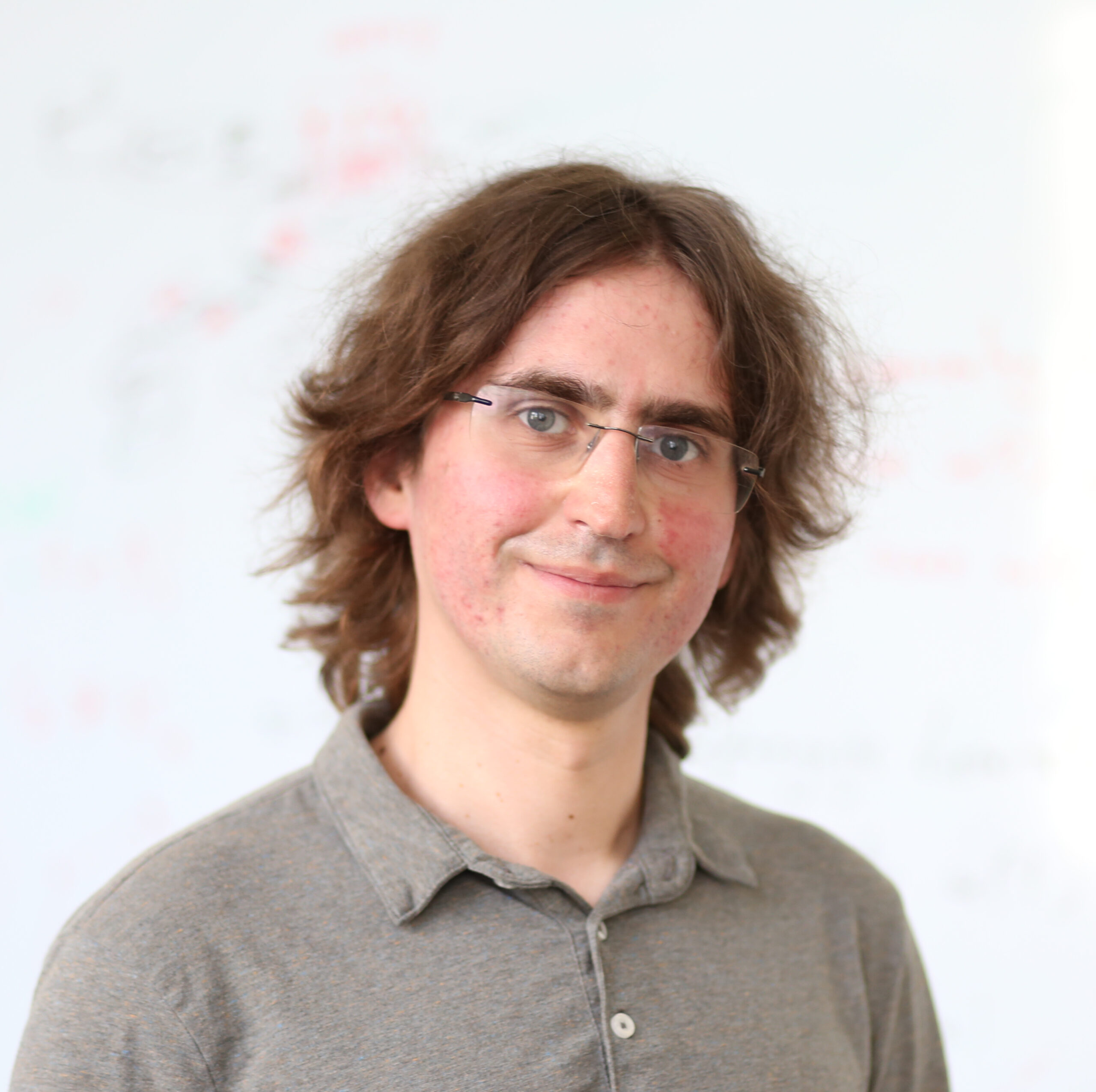
Michał Pilipczuk
Between FO and MSO
A large part of research in algorithmic finite model theory focuses on Monadic Second-Order logic MSO and First-Order logic FO. At this point it is fairly well understood that MSO is tamed exactly on tree-like graphs, while delimiting the region of tameness of FO is the subject of a large on-going project, with the suspected dividing line provided by the notion of monadic dependence. However, between FO and MSO there is a large space for logics with intermediate expressive power, and correspondingly there is continuum of concepts in structural graph theory that are less restrictive than tree-likeness, but more restrictive than monadic dependence. During the talk we will discuss how this correspondence can be understood through the concept of monadic dependence with respect to a particular logic in question. We will also present the recent results and open questions related to logic FO+conn and its dense counterpart low rank MSO.
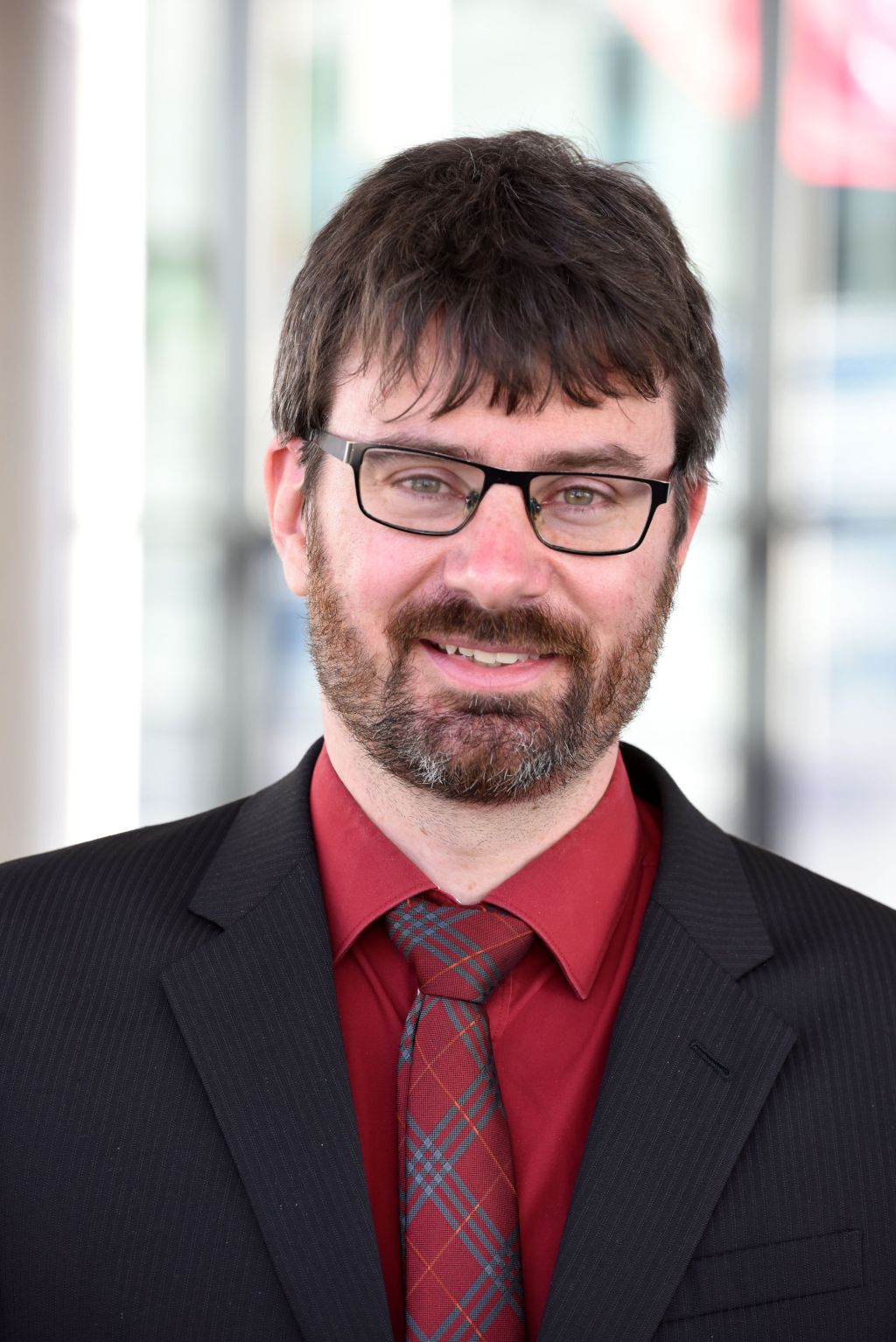
Pascal Schweitzer
An Introduction to the Weisfeiler–Leman Algorithm and Recent Developments
The Weisfeiler–Leman (WL) algorithm was initially designed as an incomplete approach to the graph isomorphism problem. In fact, it is a family of algorithms that together constitute a general combinatorial approach to identifying graphs and determining vertex properties. Indeed, WL subsumes many other ideas that researchers have explored over time. For example, despite being purely combinatorial, WL implicitly computes the eigenvalues of graphs. WL also features in Babai’s quasi-polynomial-time algorithm for computing isomorphisms.
Over time, it has become apparent that WL has a surprisingly wide range of application areas outside graph isomorphism testing. These include descriptive complexity theory (within finite model theory), the rapidly developing area of homomorphism counts, proof complexity, computational linear algebra, and, more recently, machine learning on graphs.
In this talk, I will give a gentle introduction to the algorithm and draw connections to its various application areas. I will then provide an overview of recent developments and showcase some results at the research frontier.
Over time, it has become apparent that WL has a surprisingly wide range of application areas outside graph isomorphism testing. These include descriptive complexity theory (within finite model theory), the rapidly developing area of homomorphism counts, proof complexity, computational linear algebra, and, more recently, machine learning on graphs.
In this talk, I will give a gentle introduction to the algorithm and draw connections to its various application areas. I will then provide an overview of recent developments and showcase some results at the research frontier.
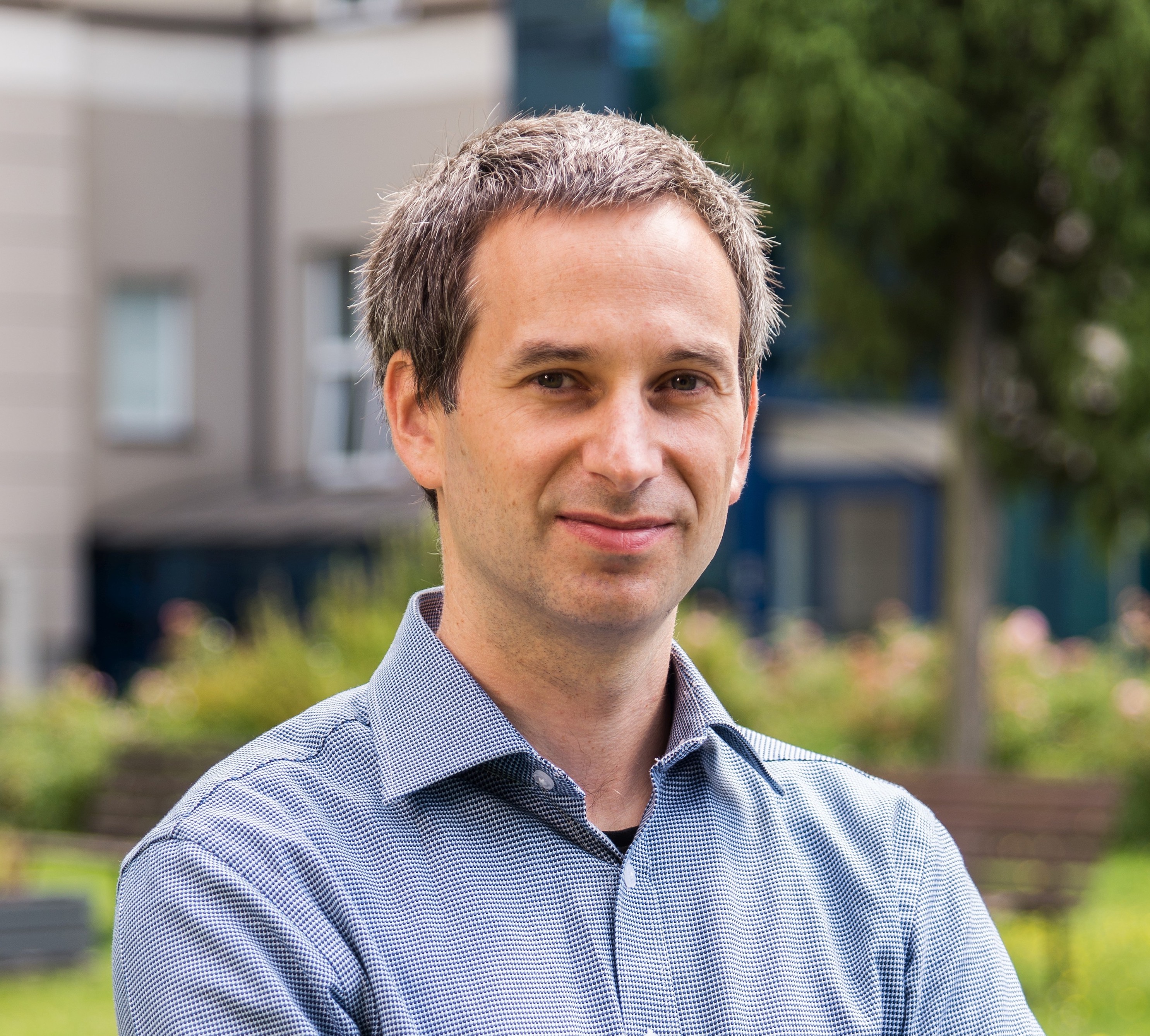
Szymon Toruńczyk
Merge-width
We introduce merge-width, a family of graph parameters that unifies several structural graph measures, including treewidth, degeneracy, twin-width, clique-width, and generalized coloring numbers. Graph classes of bounded merge-width include all classes of bounded expansion or of bounded twin-width – two central notions from the Sparsity and Twin-width frameworks. They are furthermore preserved under first-order transductions, which attests to their robustness. We conjecture that classes of bounded merge-width are equivalent to the previously introduced classes of bounded flip-width.
As our main result, we show that the model checking problem for first-order logic is fixed-parameter tractable on graph classes of bounded merge-width, assuming the input includes a witnessing construction sequence. This unites and extends two previous model checking results: the result of Dvořák, Kráľ, and Thomas for classes of bounded expansion, and the result of Bonnet, Kim, Thomassé, and Watrigant for classes of bounded twin-width. Finally, we discuss future research directions in structural and algorithmic graph theory, in particular in the study of monadically dependent graph classes, which we conjecture to coincide with classes of almost bounded merge-width. Joint work with Jan Dreier.
As our main result, we show that the model checking problem for first-order logic is fixed-parameter tractable on graph classes of bounded merge-width, assuming the input includes a witnessing construction sequence. This unites and extends two previous model checking results: the result of Dvořák, Kráľ, and Thomas for classes of bounded expansion, and the result of Bonnet, Kim, Thomassé, and Watrigant for classes of bounded twin-width. Finally, we discuss future research directions in structural and algorithmic graph theory, in particular in the study of monadically dependent graph classes, which we conjecture to coincide with classes of almost bounded merge-width. Joint work with Jan Dreier.
Venue and Local Info
Venue

Based on a design by Isabella Cissell.
Food Options
A non-exhaustive list of nearby food options for lunch. Most of these places are not designed to accommodate large groups, so best split into groups of size up to 10.
The lecture room will remain open during lunch and can be used (e.g., for take-away).
Recommendations by the organizers have the * marker
- * Swing Kitchen (Vegan Burgers) - Sit-In and Take-out
- SHU Restaurant (Sichuan) - Sit-In and Take-out
- Kenny's (Hawaiian, Bowls) - mainly Take-out
- * Fein Essen (Varying Cuisine) - Take-out
- Asia Pavillon (Chinese) - Sit-In
- * Bep Viet (Vietnamese) - Sit-In
- * Pizzeria Riva (Italian, venue of the workshop dinner) - Sit-In
- * Santos (Mexican) - Sit-In
- * Salon Wichtig (Thai Curry) - Take-out
- * Gorilla Kitchen (Mexican, Burritos) - Sit-In and Take-out
- Wieden Bräu (Austrian) - Sit-in, limited vegan options
- * Chang (Asian) - Sit-in
- Wiener Wirtschaft (Austrian) - Sit-in, limited vegan options
- Banh Mi Hoi An (Vietnamese) - Sit-In and Take-out
- Allergikercafé (Varying Cuisine, Cakes, allergy friendly) - Sit-In
- Noodle King (Noodles, Rice, Sushi) - Sit-In and Take-out
- Nr. 13 (Burritos, Bowls) - Take-out
- * Nam Nam Dabba (Indian) - Take-out
- Taste of India (Indian) - Sit-In
- Mensa TU Wien (University cantine) - Sit-In
- Billa (Supermarket)
- Hofer (Supermarket)
- Spar Gourmet (Supermarket)
- Anker (Bakery)
Participants
- Achim Blumensath
- Amelie Heindl
- Antonio Casares
- Colin Geniet
- Dan Kral
- Daniel Mock
- Daniel Neuen
- Édouard Bonnet
- Eunjung KIM
- Evangelos Protopapas
- Fatemeh Ghasemi
- Felix Reidl
- Filip Pokrývka
- Giannos Stamoulis
- Hector Buffière
- Hugo Jacob
- Ioannis Eleftheriadis
- Jakub Balabán
- Jakub Gajarský
- Jakub Nowakowski
- Jan Dreier
- Jan Jedelský
- Jeremi Gładkowski
- Joanna Fijalkow
- John Sylvester
- Julien Duron
- Julien Grange
- Karolina Drabik
- Kord Eickmeyer
- Kristýna Pekárková
- Lars Jaffke
- Laura Ogrin
- Liana Khazaliya
- Linda Cook
- Maël Dumas
- Mamadou M. Kanté
- Marcin Pilipczuk
- Marek Sokołowski
- Marlene Gründel
- Martin Grohe
- Martin Milanič
- Martin Nöllenburg
- Mathis Rocton
- Maximilian Gorsky
- Michał Pilipczuk
- Michelle Döring
- Mikołaj Bojańczyk
- Nicole Schirrmacher
- Nikolas Mählmann
- Noleen Köhler
- Pascal Gollin
- Pascal Schweitzer
- Peter Rossmanith
- Petr Hliněný
- Ramanujan Sridharan
- Robert Ganian
- Roohani Sharma
- Rutger Campbell
- Samuel Braunfeld
- Sang-il Oum
- Santiago Guzmán Pro
- Sebastian Siebertz
- Simon Wietheger
- Steffen van Bergerem
- Szymon Toruńczyk
- Tim Seppelt
- Tomáš Hons
- Viktor Zamaraev
- Yijia Chen
Scientific Organization and Funding
Organization: Jan Dreier, Robert Ganian, Martin Nöllenburg, Simon Wietheger.
We acknowledge support from the Vienna Science and Technology Fund (WWTF, Project No. ICT22-029). We are also thankful to TU Wien for providing the rooms and facilities.